
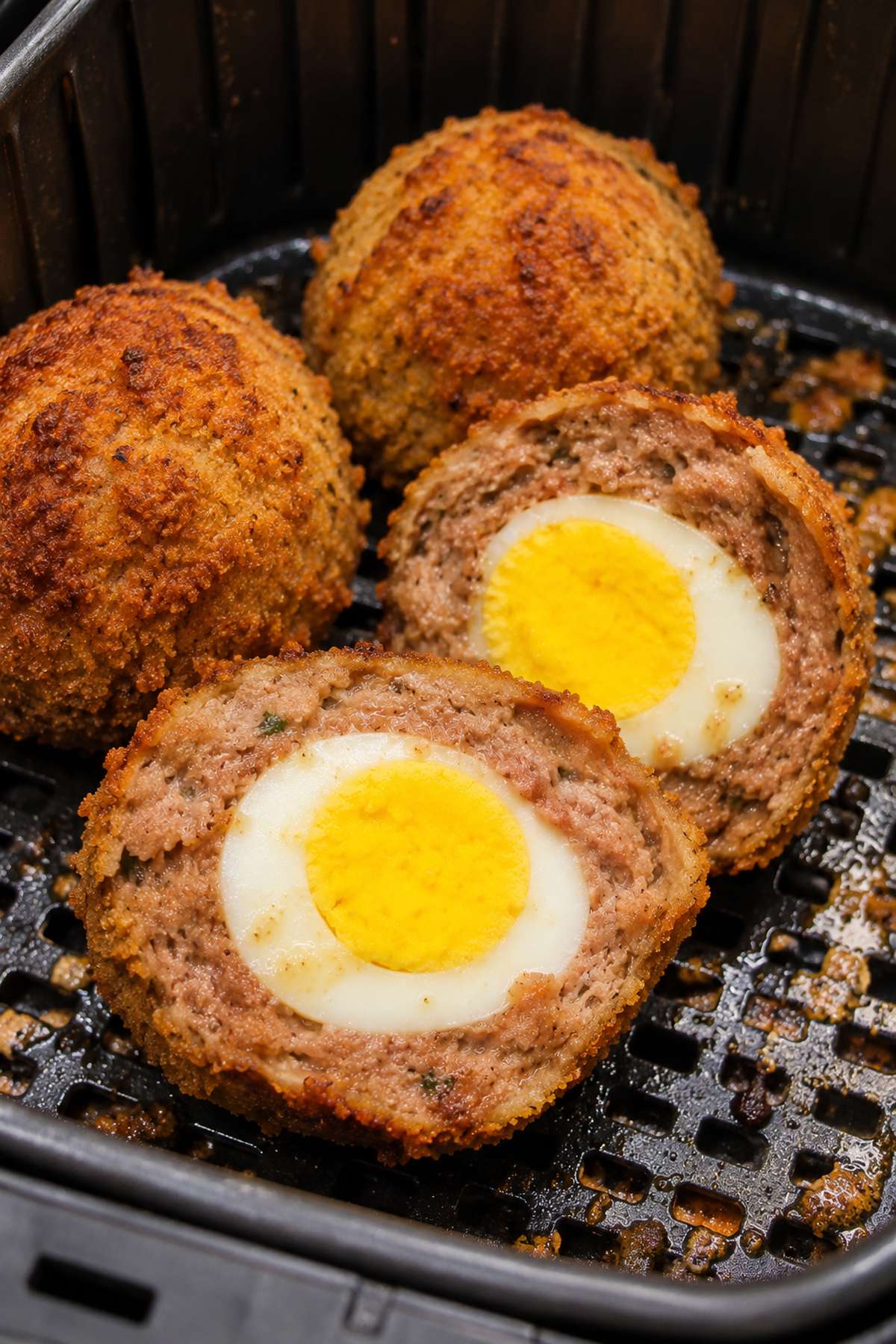
I’ve been making Scotch eggs with a mixture of ground chicken and beef instead of the traditional pork sausage. The combination gives you a flavorful meat layer without being quite as heavy, and the air fryer takes care of the crispy breadcrumb coating without a pot of hot oil.
The tricky part isn’t cooking them. It’s getting the meat to stay wrapped around the egg. I’ve learned that a little patience during assembly saves you from watching your beautiful Scotch egg split open halfway through cooking. Not exactly the surprise we’re going for.
Want to save this recipe?
Enter your email & I’ll send it to your inbox. Plus, get great new recipes from me every week!
The Secret to Air Fryer Scotch Eggs That Don’t Fall Apart
Two things make the biggest difference: the thickness of the meat layer and how well you prepare the eggs.
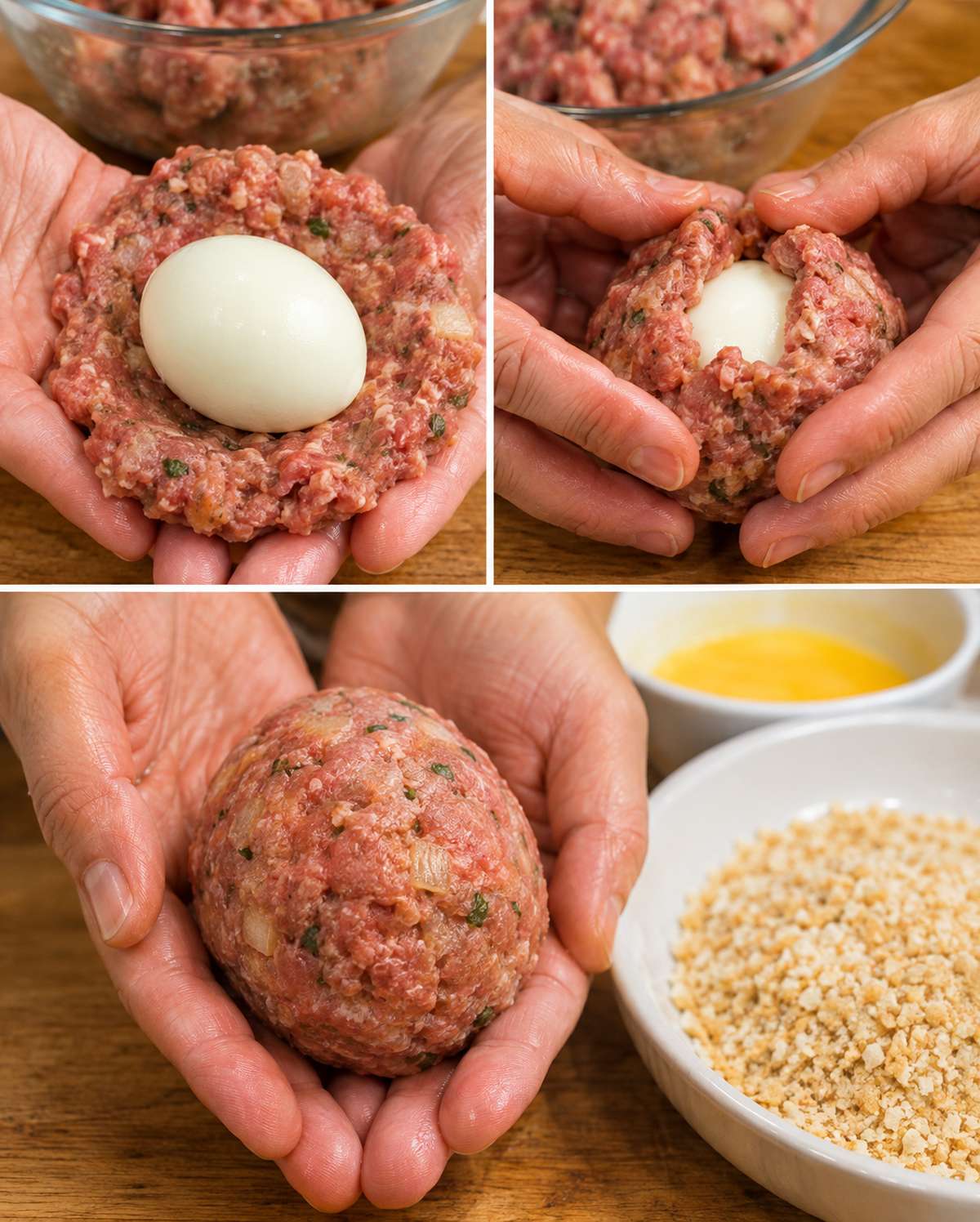
I flatten each portion of seasoned meat into a patty about ¼ inch thick, then place the peeled egg in the center. The trick is to bring the meat up around the egg gradually, pinching the seams closed before gently rolling it between your palms.
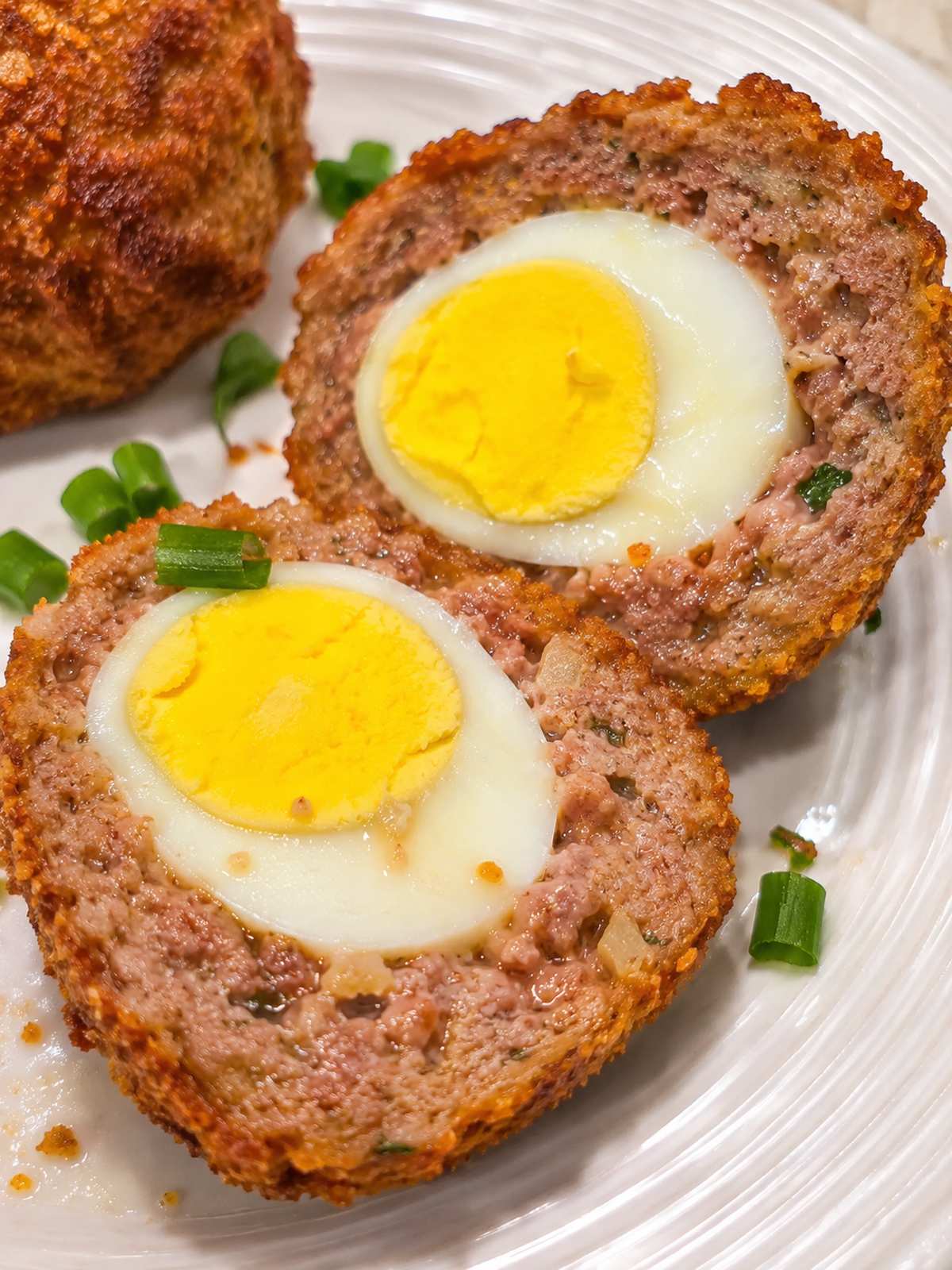
Don’t leave one side thick and the other almost transparent. Thin spots can split as the meat shrinks during cooking, while thick spots take longer to cook through.
The eggs matter just as much. I prefer fully cooked eggs for this recipe because they’re easier to peel and wrap without damaging them. My air fryer hard boiled eggs guide explains the different yolk textures and how to get them in the air fryer.
One little trick: Pat the peeled eggs dry before wrapping them. A slippery, wet egg makes the meat harder to shape and seal.
Ingredients for Air Fryer Scotch Eggs
- Ground chicken: Keeps the meat mixture lighter than an all-beef version. Use regular ground chicken rather than extra-lean if possible.
- Ground beef: Adds richness and helps balance the chicken.
- Onion: Finely chopped so large pieces don’t interrupt the meat layer.
- Fresh garlic: Adds flavor throughout the meat.
- Salt and black pepper: Season the meat mixture.
- Garlic powder and onion powder: Distribute additional savory flavor evenly.
- Worcestershire sauce: Adds a savory depth to the chicken-and-beef combination.
- Fresh dill: Gives the filling a fresh, slightly herby flavor.
- Large eggs: Cooked, cooled, and peeled before wrapping.
- All-purpose flour: Helps the egg wash adhere to the meat.
- Beaten egg: Holds the breadcrumb coating in place.
- Panko breadcrumbs: Create the crispy outer crust.
- Cooking oil spray: Helps the breadcrumbs brown evenly.
How to Make Air Fryer Scotch Eggs
1. Cook the eggs. Place the six large eggs in the air fryer basket at 275°F (135°C) for approximately 13–15 minutes for firm yolks. Immediately transfer them to an ice bath for 5–10 minutes. Peel carefully and pat dry. Air fryer models vary, so use your usual tested egg timing if needed. Want to see the eggs done in the air fryer? My friend Jo-Ann shares her air fryer hard boiled eggs video — easy to peel, step by step.
2. Mix the meat. Combine ground chicken, ground beef, finely chopped onion, garlic, seasonings, Worcestershire sauce, and dill in a large bowl. Mix until evenly combined without overworking the meat.
3. Divide and flatten. Separate the mixture into six equal portions. Flatten each into a patty approximately ¼ inch thick, large enough to wrap around an egg.
4. Wrap the eggs. Place a peeled egg in the center of each patty. Bring the meat around the egg, pinch the seams closed, and gently shape into a ball. Check for thin spots or exposed egg.
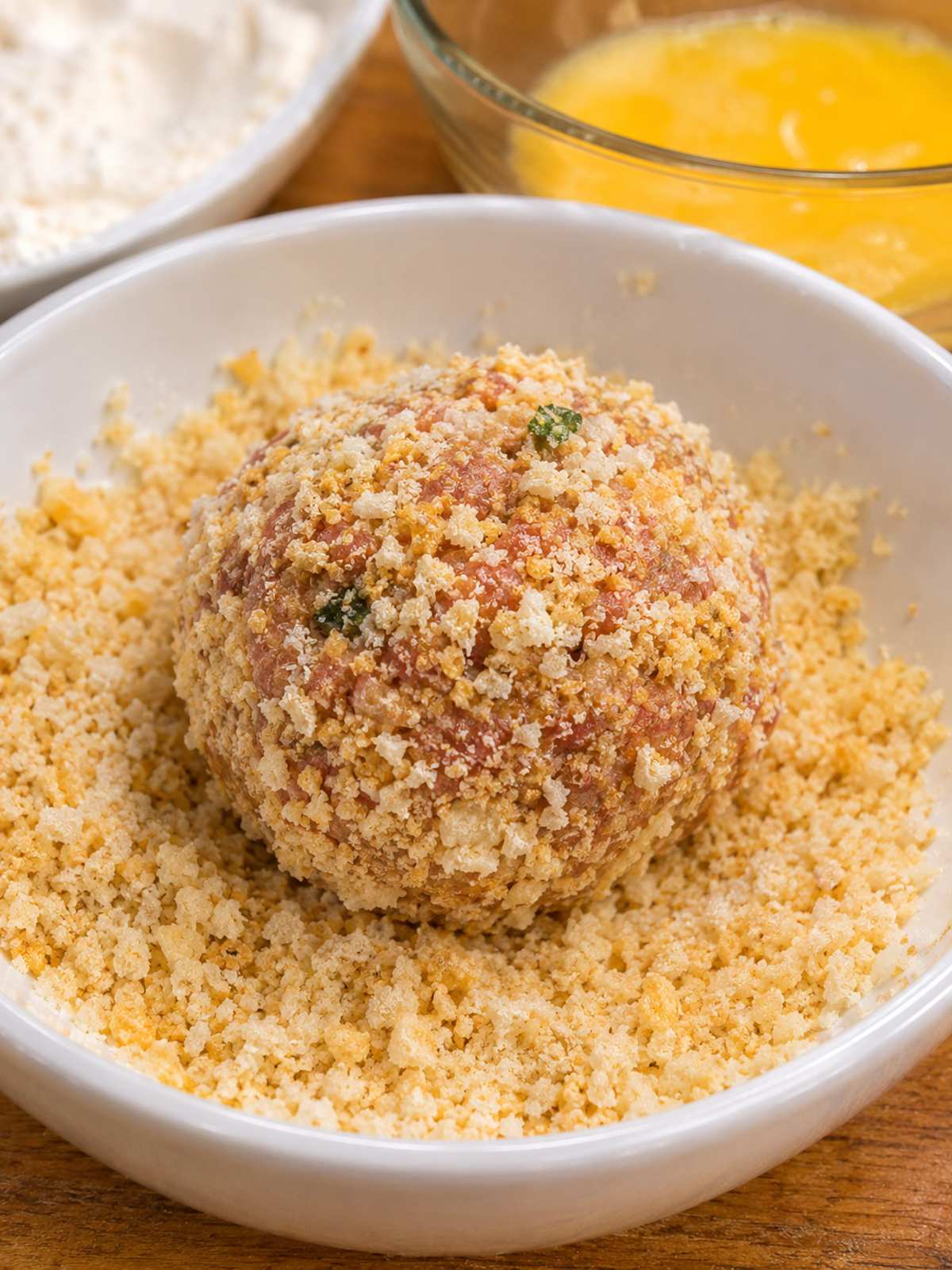
5. Bread the Scotch eggs. Prepare three shallow bowls with flour, beaten egg, and panko breadcrumbs. Roll each meat-covered egg lightly in flour, shake off excess, dip into beaten egg, and finish with panko. Press gently to help the coating stick.
6. Preheat and arrange. Preheat the air fryer to 390°F (200°C). Place the Scotch eggs in the air fryer basket in a single layer, leaving space between them. Lightly spray with cooking oil.
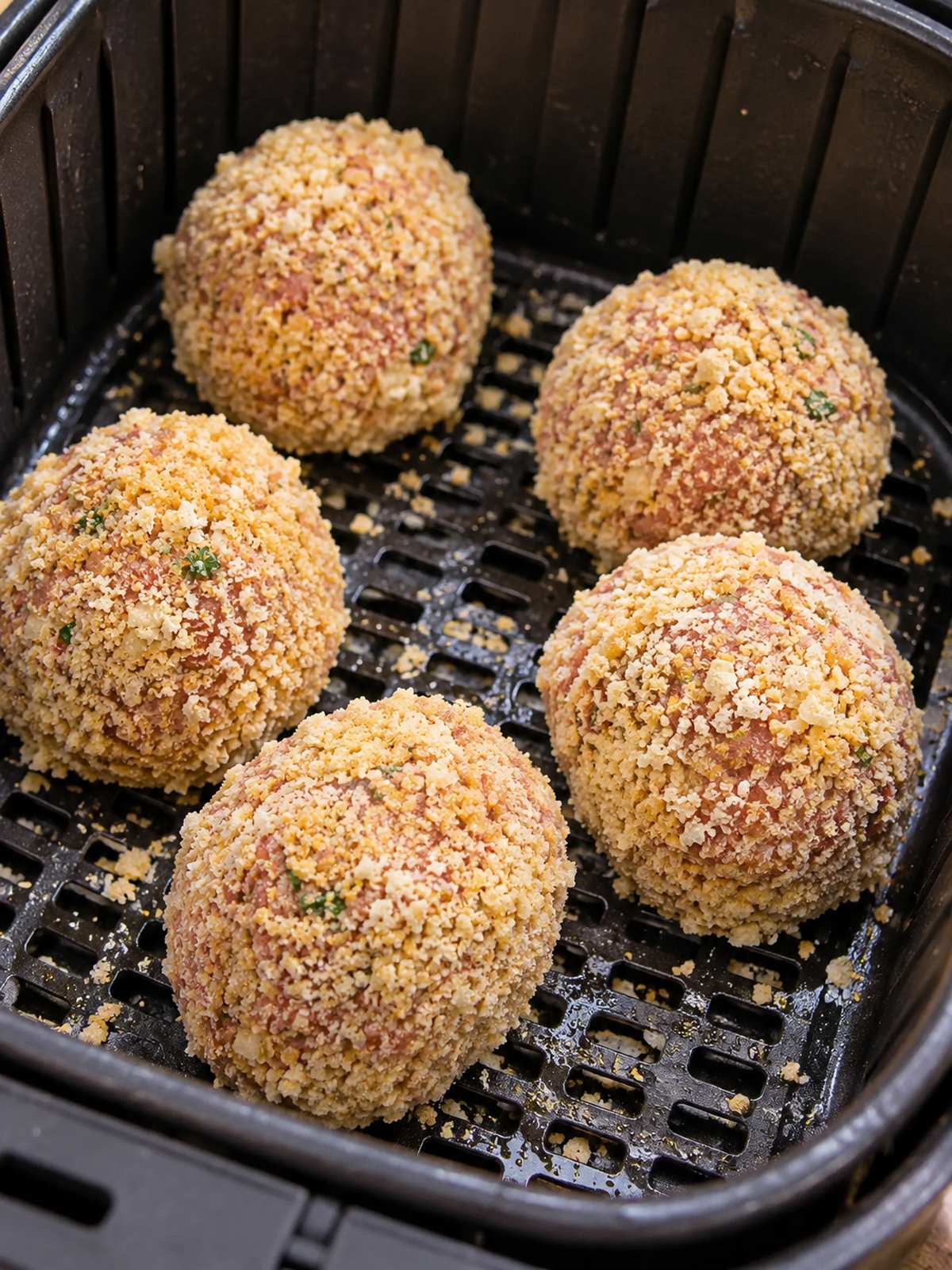
7. Air fry. Cook for 10 minutes, carefully turn, and continue for approximately 2–5 minutes, or until the coating is browned and crispy and the meat reaches 165°F (74°C) internally. Check the thickest part of the meat layer with an instant-read thermometer without touching the cooked egg. Larger Scotch eggs may need additional time.
8. Rest and serve. Let the Scotch eggs rest for 3–5 minutes before slicing. This helps the meat settle and keeps the coating from breaking apart when cut.
Troubleshooting: What Went Wrong?
Why did my sausage or meat layer crack?
Usually, the meat was stretched too thin in one spot, or the seam wasn’t completely sealed. Meat shrinks as it cooks, and weak spots open first. Try flattening the mixture evenly and gently pinching any visible seams before breading.
Why did the breadcrumbs fall off?
The meat surface may have been too wet, or too much flour was left on it. Shake off excess flour, coat thoroughly with beaten egg, and press the panko gently into the surface. Also, avoid turning the Scotch eggs before the first side has had time to set.
Why is there a grey-green ring around the yolk?
That’s generally a harmless reaction between sulfur in the egg white and iron in the yolk, caused by excessive heat or prolonged cooking. The eggs are cooked twice in this recipe, so starting with slightly less-cooked yolks can help if you prefer a softer center. Cool the eggs promptly after the initial cooking.
Why is my yolk too hard or too soft?
Remember that the egg cooks once before wrapping and warms again inside the meat. For a softer yolk, start with a jammy egg that has a fully set white, and handle it carefully. For a firm yolk, use fully cooked eggs. The second cooking stage is controlled by the meat’s safe internal temperature, not the yolk.
Why is the coating browned but the meat still undercooked?
The meat layer may be too thick, or your air fryer may brown the outside faster than the inside cooks. Reduce the temperature to 350°F (175°C) and continue cooking until the meat reaches 165°F (74°C).
Things I’ve Learned Making Scotch Eggs
- Chop the onion smaller than you think. Large onion pieces create little gaps in the meat. Finely chopped onion blends in much better.
- Keep the meat cool. If the mixture becomes sticky and difficult to shape, refrigerate it for 10 minutes. Cold meat is easier to handle.
- Don’t squeeze the breadcrumbs. A gentle press is enough. Compressing them too firmly can make the crust dense instead of crisp.
- Cut with a sharp knife. Let the Scotch eggs rest first, then use a sharp knife with a gentle sawing motion. A dull knife tends to crush the coating.
Frequently Asked Questions
Can I use breakfast sausage instead of ground chicken and beef?
Yes. Traditional Scotch eggs are usually made with sausage meat. You can substitute breakfast sausage, but check the seasoning before adding extra salt because many packaged sausages are already well seasoned.
If you enjoy sausage recipes, my air fryer sausage and peppers is another way to make a satisfying meal in the air fryer.
Can I make air fryer Scotch eggs without breadcrumbs?
Yes. For a lower-carb version, replace the panko with crushed pork rinds and use almond flour instead of regular flour. The texture will be different, but the coating can still become crisp.
Can I prepare Scotch eggs ahead of time?
Absolutely. Assemble and bread them, then refrigerate in a covered container for up to 24 hours before cooking. Keep them cold until you’re ready to air fry.
Can I use smaller eggs?
Yes. Medium eggs are easier to wrap and produce slightly smaller Scotch eggs. Keep the meat layer evenly distributed and check the internal temperature rather than relying only on cooking time.
Are Scotch eggs breakfast or dinner?
Both! They’re traditionally served as snacks, picnic food, or part of a meal. I like them with something tangy to cut through the richness. My homemade chipotle sauce makes a flavorful dipping option.
For a smaller egg-based breakfast, my air fryer egg bites are another option when you don’t want to prepare the meat wrapping and breading.
How do I store leftover Scotch eggs?
Store cooked Scotch eggs in an airtight container in the refrigerator for up to 3–4 days; refrigerate within two hours of cooking. For longer storage, freeze fully cooked, cooled Scotch eggs for up to 2 months for best quality, and thaw overnight in the refrigerator before reheating.
What’s the best way to reheat Scotch eggs?
Place refrigerated Scotch eggs in the air fryer basket at 325°F (163°C) for approximately 6–10 minutes, depending on size. Turn halfway through and heat until the center reaches 165°F (74°C). Frozen or particularly large Scotch eggs will take longer. For the crispiest coating, reheat them whole rather than sliced.
Want to save this recipe?
Enter your email & I’ll send it to your inbox. Plus, get great new recipes from me every week!
Air Fryer Scotch Eggs (Crispy Outside, Juicy Inside)
Ingredients
- ½ pound ground chicken
- ½ pound ground beef
- 1 small onion, finely chopped
- 2 cloves garlic, minced
- 1 teaspoon salt
- ½ teaspoon black pepper
- ½ teaspoon garlic powder
- ½ teaspoon onion powder
- 1 tablespoon Worcestershire sauce
- 1 tablespoon fresh dill, finely chopped
- 6 large eggs, for the centers
- ½ cup all-purpose flour
- 1 large additional egg, beaten, for breading
- 1 cup panko breadcrumbs
- Cooking oil spray, as needed
- Ice and cold water, for cooling the eggs
Instructions
- Cook the eggs: Air fry six large eggs at 275°F (135°C) for 13–15 minutes for firm yolks. Transfer immediately to an ice bath for 5–10 minutes. Peel and pat dry.
- Mix the meat: Combine chicken, beef, onion, garlic, salt, pepper, garlic powder, onion powder, Worcestershire sauce, and dill. Mix gently until combined.
- Divide: Separate meat into six equal portions and flatten into approximately ¼-inch-thick patties.
- Wrap: Place one peeled egg in the center of each patty. Wrap the meat completely around it, pinch the seams, and shape into a ball.
- Bread: Roll each ball in flour, shake off excess, dip in beaten egg, and coat with panko, pressing gently.
- Preheat: Set the air fryer to 390°F (200°C). Arrange Scotch eggs in the air fryer basket with space between them and lightly spray with oil.
- Cook: Air fry for 10 minutes, turn carefully, and cook another 2–5 minutes or until browned and the meat reaches 165°F (74°C). If browning too quickly, lower to 350°F (175°C) and continue until cooked through.
- Rest: Let stand for 3–5 minutes before slicing and serving.

Would like to see the nutrient breakdown of this item